Historical Rabbit Holes

When it comes to character and setting in fiction, small things make a big difference. For me, this is particularly the case with historical fiction, in which candid and incidental details are invaluable both in grounding a reader in the past from a sensory point of view, and also in showing how characters’ experience was relatable but not different from ours. In addition, as a reader, I find reactions to small things are critical in creating fresh, compelling three-dimensional characters who feel individual, not generic. As a writer, immersing myself in the details of everyday life in the past is one of the processes I love most.
The following are resources I found particularly useful while writing my debut historical novel, Noble Beasts, which is about the tragedy and scandal behind the Trafalgar Square lions and runs from the 1820s to the 1860s. It’s very much a non-exhaustive list: the National Archives, British Library, and local or subject-specific archives and museums are further rich seams to be mined, along with innumerable further books, websites, films, and TV series.
Health warning: these are also dangerously addictive rabbit holes.
Gateway books: histories and biographies
I like to read both fact and fiction, especially when getting to know an unfamiliar period. General histories are obviously important to get a handle on key political and cultural events, but books such as Ian Mortimer’s Time Traveller’s Guides and Ruth Goodman’s How to be a Victorian / Tudor etc are brilliant starting points for getting a feel for the incidental details of life that are so helpful in creating a colourful, convincing historical setting. Follow up footnotes and bibliographies for further rabbit holes of delight. The same applies when it comes to biographies: the everyday details and personal dramas are often even better than big-ticket events for creating a relatable sense of period and character and three-dimensional characters.
Thematic books on dress, craft, and food, or the development of a particular trade, such as bookbinding or printing, are also superb for small details. I’m currently two thirds of the way through a deep dive into eighteenth century masked balls with Meghan Kobza’s The Masquerade: A History of Extravagance and Intrigue, published earlier this year, which is illuminating in a whole raft of ways.

Novels old and new
While non-fiction is great for facts, fiction excels when it comes to capturing feelings and contemporary turns of phrase. Novels give a great sense of what people were interested in at the time they were written, for what readers saw as plausible and noteworthy, and for their morals and general mindset. Novels written in the past also provide excellent fuel for writing dialogue, offering myriad words and phrases to sprinkle through your text to give period flavour, or a style to ape if that’s your preference.
Research for Noble Beasts cemented my love of eighteenth and nineteenth-century novels. Favourites included Laurence Sterne, Frances Burney, Ann Radcliffe, Walter Scott, Mary Shelley, Susan Ferrier, Jane Austen, Benjamin Disraeli, Charles Dickens, Elizabeth Gaskell, the Brontës, George Elliott, and Anthony Trollope.
Because they’re all out of copyright, it’s (usually) easy to get hold of copies whatever your budget. Audiobooks are very helpful here, especially to get your ear in if your eighteenth-century English is a bit rusty.
Modern novels set during the period you’re looking at are also important, both as comparison titles when submitting to agents, and to get a feel for what modern readers expect your part of the past to feel like. Creating a story modern readers will find convincing and compelling is not always the same as being historically accurate. One of the joys and agonies of writing historical fiction is choosing which is more important to the story you want to tell and trying to strike a balance.
Letters and diaries
Unsurprisingly, the actual words of the people on whom your characters are based are worth their weight in gold – if you can get them. If you’re fictionalising real figures, their own words are invaluable, if your characters are entirely your own creation, letters of real people from similar backgrounds are extremely useful for attitudes, interests, and phrases, as well as for general period awareness. Archives, local and national, hold large collections, and many allow free access. Some have substantial parts of their collections digitised or can scan documents for you (for a fee). It’s always worth asking. Histories and biographies also tend to draw heavily on letters and diaries and following up footnotes can sometimes lead you to buried, or at least unpublished, treasure.
Noble Beasts is about the artist, Edwin Landseer, and one of the most thrilling and moving parts of my research was sifting through his own correspondence, which was full of indecipherable in-jokes, sketches, dinner plans made and cancelled, thoughts on dogs, evidence of deep-rooted friendships, and moments of the most poignant personal tragedy.
Newspapers
One of my favourite rabbit holes is the British Newspaper Archive. It’s a subscription service but was more than worth the fee for me – I’d rather be reading the news in 1826 than 2026 anyway. With hundreds of thousands of digitised pages stretching from the 1700s to the present, it’s possible to get lost in it for centuries. Containing publications from major cities plus often overlooked provincial papers, it’s superb for getting a feel for what was thought remarkable, amusing, outrageous, and laudable. It’s also an excellent reminder that responses to issues and events varied widely, and that as today, people in the past were complex, conflicted, and rarely fitted into stereotypical boxes, all of which makes for richer, more convincing and compelling characters.
The British Newspaper Archive is also fabulous for details such as the weather, local events, crime and trial reports, personal announcements, situations wanted and vacant, local businesses, and other vital-but-niche data such as herring catches. The adverts are equally informative, detailing miracle cures, food, fashion, health fads, transport options, timetables and prices, Christmas presents, society events, books, prints, and sales of houses, paintings, animals and much more. Other longstanding publications, including The Times and The Spectator, have their own archives, accessible to subscribers.
Travel Guides
Travel memoirs have been bestsellers for centuries and are fascinating, amusing, rich sources of detail about daily life and daydreams in the past. They can also be found second hand and online reasonably easily without breaking the bank. It’s necessary to take them with a small pinch of salt - they’ve usually been composed with a degree of artistic license - but they are wonderful for maps, timetables, and advice on how to deal with difficulties en route. In the case of commercial guides published from the later nineteenth century onwards, the adverts are also superb, providing (sometimes eyebrow-raising) insight into the aspirations, desires, and mindset of people of the past.
Travel book illustrations are also useful visual sources for locations in the pre-photographic age, and separate eighteenth and nineteenth-century prints of street views are not too hard to find online and at local auctions (www.thesaleroom.com is a great resource for searching). It’s also worth staring like a lunatic at prints on the walls of local pubs and cafes, and checking out local history groups and websites. As with modern travel information, the images have often been manipulated, so these too should be consumed with the proverbial pinch of salt, but they remain excellent idea starters.
Of course, it almost goes without saying that visiting a location is infinitely more inspiring and informative than simply reading about it. I also love living museums from and found the Highland Folk Museum (Newtonmore, the Scottish Highlands) and No. 1 Royal Crescent (Bath) particularly good when researching Noble Beasts.
Paintings and prints
Images, particularly those depicting ordinary life, are another gold mine (though, unsurprisingly, also to be taken with a pinch of salt). Formal portraits are excellent for grand details and are informative about the upper echelons of society and social aspirations, but what I love most is to dive into details of kitchen scenes, pictures of pubs, shops, and satirical prints. I spend hours squinting at the accessories, the crockery, what’s on dressers, tables, and walls, what cats, dogs, and children are doing, and what can be seen through windows. (This type of research actually justifies using a magnifying glass, which makes it even more fun.)
On the spot sketches, never intended for publication, are also fantastic for small details. In researching Noble Beasts, I was lucky to be able to view numerous candid drawings made by Edwin Landseer and they really added to my sense of the characters of the people I was writing about, plus gave me tools to illustrate those characters on the page through habitual postures, accessories, and attitudes.

Dictionary Corner
Two other all-time favourite rabbit holes are the Oxford English Dictionary (online) and the Routledge Dictionary of Historical Slang (hard copy). Both offer a mesmerising selection of words and phrases, giving dates for earliest recorded written usage and estimated periods of popularity and obsolescence. The OED also has a historical thesaurus function. Warning: it can be particularly addictive and the temptation to strew your manuscript with weird and wonderful historical phrases can be overpowering, but a little goes a long way. As so often, it’s about striking a balance and deploying a selection of historical treats carefully for maximum impact.
Author Bio
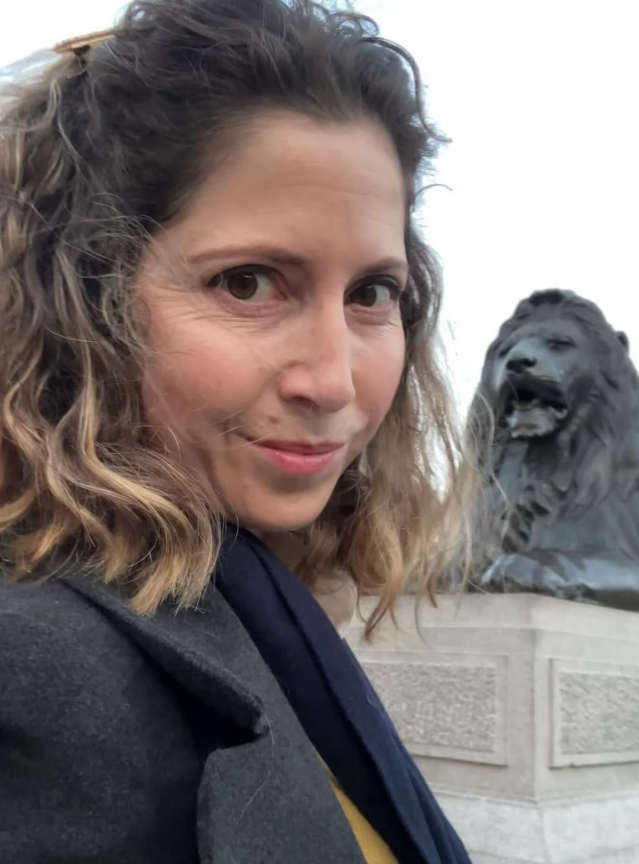
Lucy Waverley is currently a novelist, but has been a bookseller, lawyer, and outdoors-ish feature writer, whose subjects ranged from birding with Bill Oddie to tea planting in Cornwall. She studied history and art history at the University of Oxford and is a graduate of the Faber Academy’s Writing a Novel course. Noble Beasts is her first novel and was short listed for the Cheshire Novel Prize and long listed for the Caledonia Novel Award.
Social media:
@history_is_so_last_century (Instagram)
Website:
Purchase link:


Comments